Showing posts with label University of Tokyo. Show all posts

Thursday, July 1, 2010

Yokohama Renewable Energy Conference 2010

On Thursday, July 1, 2010, I was given the opportunity to go with Professor Hanaki to the 2010 Renewable Energy Conference in Yokohama, Japan. First, I listened to a couple of sessions on biofuels.
Then, I was able to listen about the sustainability programs in Australia National University (ANU is located in Canberra), ETH Zurich (located in Switzerland), Tongji University (located in Shanghai, China), and, of course, the University of Tokyo (UT aka Todai). It was a special workshop with a speaker panel following the short presentations about campus sustainability (what is about, what each university has to offer, what each university priorities, the philosophy behind each university).Thanks to this man who organized the whole conference in addition to organizing this special workshop on campus sustainability.
Here are some quick notes about the universities:
ETH Zurich: Focused on the campus called "Science City," introduced how design (design of buildings, design of areas..etc) makes a difference in bringing together people to create sustainable campus community
Tongji University: Talked about how they can monitor the energy consumption of over 300 campus buildings with up-to-date metering by the hour. They plan to expand this system over multiple (quite a few actually) campuses across China. Administrators just log on to the website and then they can see where energy is being consumed and how much is being consumed.
Australia National University: Talked about taking in sustainability with a holistic view, they also have paid student internships to ensure the turnover of students and student projects are less of an issue
University of Tokyo: the University of Tokyo owns forested area in northern Japan which is estimated to store up to half of Todai's carbon emissions yearly.
Can you imagine? They spent half a year working on installing the system that monitors the energy consumption of over 300 buildings. All analysis, graphs, and data can be collected and viewed online (via special username and password). Speaker Panel. Left to right: ANU, University of Tokyo, ANU, ETH Zurich, Tongji UniversityWhat a coincidence! From left to right: Joana Portugal from Portugal & University of Tokyo, Joanna Young from UC Berkeley, Joanne Dy from University of Tokyo Goodbye Yokohama!
I want to thank Professor Hanaki for that wonderful, enlightening day.

Wednesday, June 23, 2010

Meeting the President of the University of Tokyo

Two important meetings occurred today. In the morning, there was a working group meeting about management and student affairs; also, representatives from Panasonic presented their research on more efficient lighting control systems. In the late afternoon, there was a meeting with the President of the University of Tokyo, Junichi Hamada, about the current progress of TSCP.At the University of California, Berkeley, the Office of Sustainability (OS) is under the immediate Office of the Vice Chancellor.
At the University of Tokyo, Todai Sustainable Campus Project (TSCP) is under the Office of the Executive Vice President, who is currently Masahiko Isobe.
My picture with the Vice President of the University of Tokyo (UT)
My picture with the President of the University of Tokyo (UT)
This is equivalent to me taking a picture with the Chancellor of UC Berkeley.

Tuesday, June 22, 2010

TSCP Management Working Group Meeting

Today, there was a TSCP Management Working Group meeting; attendees were TSCP core members and its 8 associates, which consists of professors from various departments, Manager of General Affairs, Manager of Financial Affairs, and General Manager of Facilities. A variety of topics and updates for April and May were covered.
1. Current and Future Measures: a large renovation project application is rejected, consolidation of high-efficiency refrigerators and household lamps
2. CO2 emissions for April & May: Hongo campus had +48 ton-CO2 due to heating operations, Komaba 1 campus had a -40 ton-CO2 due to improvement of lighting and air-conditioning, Komaba 2 campus had a -51 ton-CO2 due to stopping the clean room, Shirokane campus had -172 ton-CO2 due to improvement in operations, Kashiwa campus had 89 ton-CO2 due to the activities by the Atmosphere and Ocean Research Institute
3. Carbon Offsets: The Ministry of the Environment is asking for materials about J-VER (Japan Verified Emission Reduction Scheme). There is lots of mention about forest thinning. Here is a very short article about J-VER, Japan's domestic offset trading.
4. Writing Articles and Reports: Submitted reports to Heat Pump & Thermal Storage Technology Center of Japan (about heat pumps), Architectural Institute of Japan, The Society of Heating, Air-conditioning, and Sanitary Engineers of Japan (about air-conditioning)
5. Miscellaneous: 1) New posters proposal 2) discussion about cost-effectiveness regarding long term and short term projects 3) a need for greater student involvement in TSCP efforts
The one on the left has some green tips like turning off your computer when not in use while the right is a tribute to the World Cup and designed for summer months
Fun Tidbit of the Day! Regarding University of Tokyo's waste stream, a main culprit is the hospital building's syringes. Y-axis is tons of waste, X-axis is year. Each bar is divided into waste from 1. Hongo campus (yellow) 2. Hongo Medical building (red) 3. Komaba 1 campus (orange) 4. Komaba 2 campus (purple) 5. Shirokane campus (white) 6. Kashiwa campus (green)

Monday, June 21, 2010

University of Tokyo CO2 Emissions 2009

As much as I would like to write an executive summary on the University of Tokyo's CO2 emissions inventory for 2009, I'm afraid my knowledge is not up to par. Thus, I will give you the minimum that I do know.
Using 2000 as the standard for comparison, the University of Tokyo had a CO2 reduction of 2,462 ton-CO2/year for 2009. Remember that the University of Tokyo is made up of 5 main campuses. Let's do the breakdown-

Hongo Campus: -2,360 ton-CO2 (reduction due to the introduction of the new heat recovery turbo chiller)Komaba 1 campus: -313 ton-CO2 (reduction due to greater energy awareness educations, energy saving stickers)Komaba 2 campus: 178 ton-CO2 (increase due to new computers servers and networks)Kashiwa campus: 401 ton-CO2 (increase due to new buildings built)Shirokane campus: -367 ton-CO2 (reduction due to the manual stopping of 2 of the 6 boilers)
I thought today's piece of information was incredibly interesting. I end with a sustainability tidbit about Cambridge. When calculating CO2 emissions in 2007, Cambridge was the only university to fill out the section titled "Farm Animals." What did it say? 900 heads.

Friday, June 18, 2010

Turning off the Office Lights during Lunch & TSCP Posters

Every lunchtime from 12:00-1:00pm, TSCP staff practice the habit of turning off the office lights. Staff members leave the office to eat lunch so leaving the office lights on would be a waste.
Lights off in the TSCP Office during lunchIn fact, TSCP even came out with a promotional poster about the green tip.
Here's another poster about winter air-conditioning.
The TSCP posters were a student's idea. And, what is interesting is that the University of California, Berkeley Office of Sustainability posters were also a student's idea and was funded by a grant given to the student. However, TSCP posters were designed by graphic design professionals, while UC Berkeley's sustainability posters were designed by a student designer.

You can view and download the University of Tokyo sustainability posters: Turning Off the Lights, Air-conditioning Settings During Summer, Air-conditioning Settings during Winter
You can view and download UC Berkeley sustainability posters here.

Tuesday, June 15, 2010

TSCP Gets Settled In

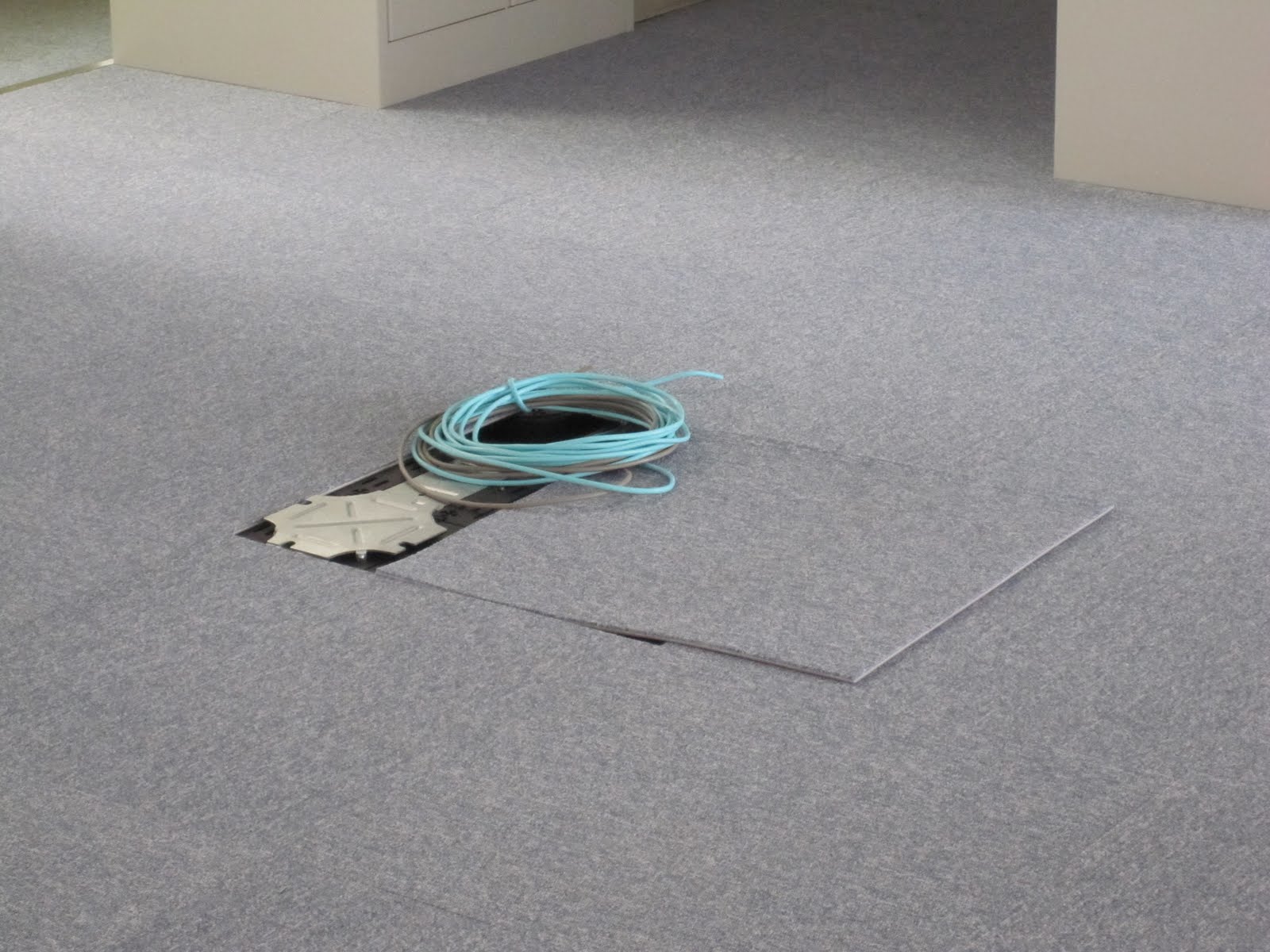
Today was the unpacking of the boxes for TSCP as well as getting acquainted with the new office building and its inhabitants. Here's what I found was interesting: the tiles on the floor are removable and you can hide the wires underneath them so no one trips over them.
Today, someone brought over the drafts of the new TSCP posters telling people to turn down (or rather turn up in temperature) the air-conditioning.

For lunch, we went out to eat at Puri, an Indian curry restaurant. I ordered chicken keema curry with naan and iced chai tea. In Berkeley, naan is usually round rather than triangular. Nevertheless, it was delicious and extremely filling!

Thursday, June 10, 2010

Todai Sustainable Campus Project (TSCP)


Here at the University of Tokyo (UT aka Todai), a major research university in Japan, sustainability is a priority. With a total floor area of 1,592,030 m2 where 88% of which is the five main campuses combined (Hongo, Komaba 1, Komaba 2, Kashiwa, and Shiroganedai), Todai has around 7,603 board, faculty, and staff, 14,394 undergrads, and 14,196 postgraduates (2007). It has an estimated CO2 emission of 143,926 tons a year with an energy source of 85% electricity, 14% city gas, and 1% heavy oil (2008). It's interesting to note that the University of California, Berkeley (UCB aka Cal) produces an estimated 209,998 metric tons a year (2008) with purchased electricity accounting for 30% of total CO2 emissions, purchased steam 41%, and natural gas 5% (2007).

Similar to University of California, Berkeley's Office of Sustainability, Todai Sustainable Campus Project (TSCP) is in charge of planning, implementing, and overseeing initiatives that lead the university towards reducing energy consumption, increasing energy efficiency, and lowering overall CO2 emissions. Among its goals is for Todai to become a model for a future, sustainable society.

TSCP currently has two action plans- TSCP2012 (2008-2012) and TSCP2030 (-2030). TSCP2010 calls for a 15% CO2 emission reduction by 2012, while TSCP2030 calls for a 50% CO2 emission reduction by 2030 from 2006 levels. Note that UC Berkeley's CalCAP action plan is to reach 1990 levels by 2014; total CO2 emissions in 1990 was 161,918 metric tons (CalCAP, 2007) .

Having been briefed on UC Berkeley's sustainability measures, goals, and initiatives and now a bit on the University of Tokyo's, I find that there is a strong focus on energy saving projects regarding buildings and lighting largely due to its relatively easy implementation and quick payback. Funding expensive energy saving projects is an investment, so calculating the investment recovery period is a vital process that every office must deal with.

For Todai, it replaced 38, 605 lights from 100 Watt FLR fluorescent lighting to 56 Watt Hf fluorescent lighting. And with large scale procurement, it reduced the investment recovery years to 6.9 years. For UC Berkeley, it replaced 8-ft T12 fluorescent lamps & electronic ballasts to the more efficient 4-ft T8 lamps and low-wattage electronic ballasts in Wurster Hall (Abesamis) and 23 2-lamp 40 Watt T12 fixtures with 2-lamp 32 Watt T8 in a stairwell in Evans Hall (PIER).

External Links
University of Tokyo (Japanese): http://www.u-tokyo.ac.jp/index_j.html
University of Tokyo (English): http://www.u-tokyo.ac.jp/index_e.html
Todai Sustainable Campus Project (Japanese): http://www.tscp.u-tokyo.ac.jp/
Todai Sustainable Campus Project (English): http://www.tscp.u-tokyo.ac.jp/en/

UC Berkeley: http://berkeley.edu/
UC Berkeley Sustainability: http://sustainability.berkeley.edu/
UC Berkeley Office of Sustainability: http://sustainability.berkeley.edu/os/

Special and Endless Thanks to

Lisa McNeilly, Judy Chess, Professor Hanaki, Mr. Morita, Kawano-san, Sakoda-san, and Muira-san for all the planning, organizing, emailing, excellent care, and so much more making this fellowship possible and thoroughly enjoyable!