Showing posts with label TSCP. Show all posts

Thursday, June 17, 2010

Working Group for Efficient Equipment and Meeting with Kankyo Sanshiro

Today, TSCP met with the Working Group for Efficient Equipment which consisted of a professor, a project assistant professor from the Department of Architecture, and several representatives from various Japanese companies (Panasonic, Daikin, and Sanyo).
On today's agenda was the discussion about the guidelines for and the renewal of freezers and refrigerators. Representatives from Sanyo presented their wide selection of highly-efficient equipment and a case-study about their freezers and refrigerators. I learned about the PSE Mark (pictured to the left) which stands for Product Safety Electric Appliance and Materials. It is a mandatory mark given to most electrical appliances for homes and businesses.

TSCP was established in 2008 and is in charge of creating guidelines for building design, building operations, and renewing equipment. These measures are consistent with Todai's action plans, TSCP2012 and TSCP2030 (see earlier post).
Some measures mentioned in the general guidelines include:
-the strengthening of window and external wall insulation
-efficient use and control of fluorescent lighting
-reducing the stand-by power for equipment
-the optimization of air-conditioning

But, today's topic was refrigerators and freezers. Laboratory refrigerator/freezers have long working hours regardless of the season. Depending on their size and temperature settings, refrigerators can consume massive amounts of energy. Thus, ensuring the renewal of such equipment follows certain guidelines is very cost-effective (and CO2 reducing).
Here are some targets/specifications for the different types of refrigerators and freezers regarding their power consumption.
Cold Storage (+2 or more ℃): 30% reduction
Freezer (-20 ~ -45 ℃): 10% reduction
Deep Freezer (below -85 ℃): 6% reduction

Daikin representatives' business cards, Sanyo product list, and the guidelines

At night, Kankyo Sanshiro, the largest environmental student group on campus, held their 1st meeting with TSCP, giving students a chance to learn what TSCP is about and has been up to.
Introduction of sustainability efforts by Professor HanakiStudents and slides on the TSCP2012 and TSCP2030 action plans
TSCP Staff (left to right): Muira-san & Kawano-san

Wednesday, June 16, 2010

Rechargeable Battery Bicycles

Today, TSCP ended the day with a meeting with Professor Hanaki and representatives from Kankyo Sanshiro, the largest environmental student group on campus. But since the TSCP office is far away from Engineering Building #14, my co-workers and I decided to take motor-assisted bicycles.
Here's a picture of my co-worker with his motorized bicycle. They look like regular bicycles with a battery pack below the seat. When riding on one, it gives you an extra boost of acceleration when you pedal forward. Also notice that in Japan, people don't lock up their bicycles. Here's a closer look at the rechargeable battery that I have placed on top of my bicycle seat. You put in the battery vertically below the seat, lock it with your key, and then turn on the bicycle.
These rentable bicycles are not for students, instead, they are for staff and faculty. Here is the board where you pick up the key, write down your name and department, and pick up a rechargeable battery. However, most of the rentable bicycles are not motorized.

Tuesday, June 15, 2010

TSCP Gets Settled In

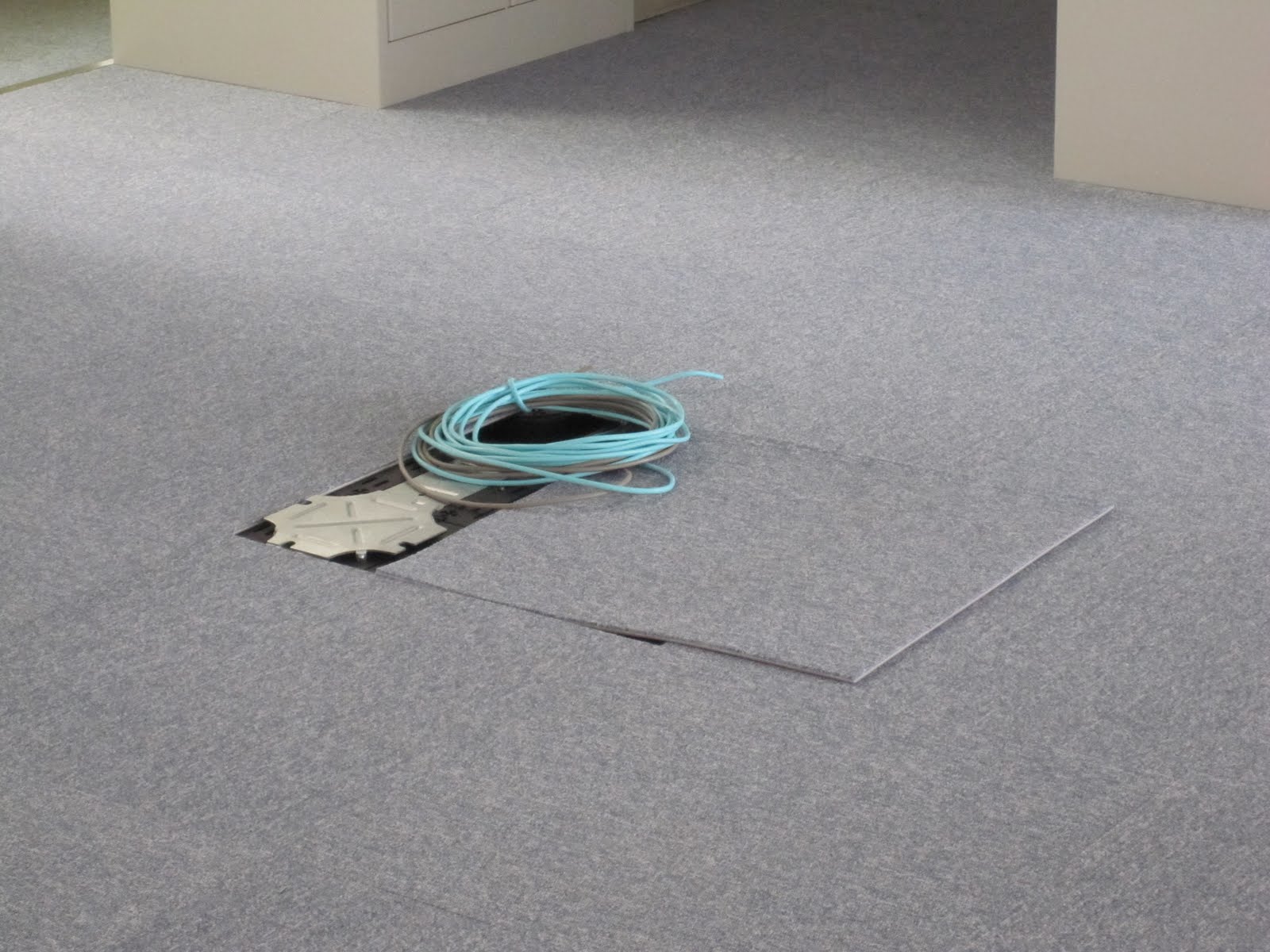
Today was the unpacking of the boxes for TSCP as well as getting acquainted with the new office building and its inhabitants. Here's what I found was interesting: the tiles on the floor are removable and you can hide the wires underneath them so no one trips over them.
Today, someone brought over the drafts of the new TSCP posters telling people to turn down (or rather turn up in temperature) the air-conditioning.

For lunch, we went out to eat at Puri, an Indian curry restaurant. I ordered chicken keema curry with naan and iced chai tea. In Berkeley, naan is usually round rather than triangular. Nevertheless, it was delicious and extremely filling!

Monday, June 14, 2010

TSCP moves to a New Office!

Today was moving day for TSCP! Originally located on the 2nd floor Administration Bureau Bldg.2 of the Hongo campus, TSCP's new office is on the 5th floor of Administration Bureau building. It was a relatively easy move as the two buildings are next to each other.

As for me, I packed some boxes but was also given my first task- to write a 200-300 word abstract for a study on reducing the environmental impact of university facilities, specifically on the effectiveness of the measures implemented in the University hospital, pharmacy, and medical buildings. TSCP is submitting its extensive report for the 10th IEA Heat Pump Conference 2011 which will be held in Tokyo, Japan from May 16-19th, 2010.

I'm currently still trying to decipher the paper but here's what I have so far:
1. The University has 5 main campuses and owns around 500 buildings. After classifying each building into one of four categories (1. arts 2. office 3. science 4. hospital/pharmacy/medical), it was found that arts and office buildings have the lowest primary energy consumption per unit per year and lowest CO2 emissions per unit per year, while science buildings are double that and hospital/medical buildings are triple.

2. Targeting the worst energy offender, the medical buildings, the paper further divides the area into 1. research/management facilities and 2. hospital facilities. The paper notes the effects of renewing and using different heat pumps (air-cooled chiller, steam absorption chiller, non-heated chiller) and how the introduction of a new heat recovery centrifugal chiller was able to reduce primary annual energy consumption and thus CO2 emissions. It goes on to explain the effects of seasons, recording the changing monthly COP (coefficient of performance which is the ratio of useful heat movement to work input) of the pumps.

Lastly, my co-workers treated me out a delicious and enormous plate of zaru soba! Zaru soba is cold buckwheat noodles that you dip in a delicious broth which you can even turn into tea if you're done with all your noodles.

Friday, June 11, 2010

TSCP has a Conference with Tokyo Metropolitan University

Like a serious scientist passionate about his or her research, Todai Sustainable Campus Project (TSCP) attended a conference to exchange information with those in the same field. Using public transportation, TSCP traveled afar to Minami-Osama for a meeting with Tokyo Metropolitan University (TMU) to discuss sustainability goals, energy efficiency, and water and temperature management. After the conference, TMU was kind enough to give a sustainability walking tour of the university.

This nifty device was a card scanner for a room. You put your card up to this reader and it automatically unlocks the door and turns on the lights. When you exit, you put your card up to this reader again and it locks the door while turning off the lights.
Down in the basement lies the central control room where one can monitor the temperature of the air going into a room and the air going out for multiple buildings. Air conditioning is a must for Japan's hot seasons and a great place to begin energy-efficient measures.
Just look at the extensive control panel!
Here you can monitor temperature input and output.
Walking around campus
Water boiler! Not all aspects of sustainability can be photogenic...
Lovely landscaping
A 3-D model of the entire Tokyo Metropolitan University with TSCP staff on the left
View from the top: track field on the left, tennis courts in the upper right, and behind the track field is a baseball field.
A view from the top floor of a newly re-tiled building. I didn't take a picture of the tiles, but apparently they're really expensive.
Today's lesson was that learning from and exchanging information with others is an absolute must for development.

Also, for dinner, Professor Hanaki invited me to join his Urban Engineering research laboratory's Welcome Party! We had a huge variety of delicious okonomiyaki and monja plus a bunch of side dishes like chicken kaarage (fried chicken) and edamame (soy beans). I had an excellent time meeting other undergraduates, postgraduates, and even some doctoral candidates!

Thursday, June 10, 2010

Todai Sustainable Campus Project (TSCP)


Here at the University of Tokyo (UT aka Todai), a major research university in Japan, sustainability is a priority. With a total floor area of 1,592,030 m2 where 88% of which is the five main campuses combined (Hongo, Komaba 1, Komaba 2, Kashiwa, and Shiroganedai), Todai has around 7,603 board, faculty, and staff, 14,394 undergrads, and 14,196 postgraduates (2007). It has an estimated CO2 emission of 143,926 tons a year with an energy source of 85% electricity, 14% city gas, and 1% heavy oil (2008). It's interesting to note that the University of California, Berkeley (UCB aka Cal) produces an estimated 209,998 metric tons a year (2008) with purchased electricity accounting for 30% of total CO2 emissions, purchased steam 41%, and natural gas 5% (2007).

Similar to University of California, Berkeley's Office of Sustainability, Todai Sustainable Campus Project (TSCP) is in charge of planning, implementing, and overseeing initiatives that lead the university towards reducing energy consumption, increasing energy efficiency, and lowering overall CO2 emissions. Among its goals is for Todai to become a model for a future, sustainable society.

TSCP currently has two action plans- TSCP2012 (2008-2012) and TSCP2030 (-2030). TSCP2010 calls for a 15% CO2 emission reduction by 2012, while TSCP2030 calls for a 50% CO2 emission reduction by 2030 from 2006 levels. Note that UC Berkeley's CalCAP action plan is to reach 1990 levels by 2014; total CO2 emissions in 1990 was 161,918 metric tons (CalCAP, 2007) .

Having been briefed on UC Berkeley's sustainability measures, goals, and initiatives and now a bit on the University of Tokyo's, I find that there is a strong focus on energy saving projects regarding buildings and lighting largely due to its relatively easy implementation and quick payback. Funding expensive energy saving projects is an investment, so calculating the investment recovery period is a vital process that every office must deal with.

For Todai, it replaced 38, 605 lights from 100 Watt FLR fluorescent lighting to 56 Watt Hf fluorescent lighting. And with large scale procurement, it reduced the investment recovery years to 6.9 years. For UC Berkeley, it replaced 8-ft T12 fluorescent lamps & electronic ballasts to the more efficient 4-ft T8 lamps and low-wattage electronic ballasts in Wurster Hall (Abesamis) and 23 2-lamp 40 Watt T12 fixtures with 2-lamp 32 Watt T8 in a stairwell in Evans Hall (PIER).

External Links
University of Tokyo (Japanese): http://www.u-tokyo.ac.jp/index_j.html
University of Tokyo (English): http://www.u-tokyo.ac.jp/index_e.html
Todai Sustainable Campus Project (Japanese): http://www.tscp.u-tokyo.ac.jp/
Todai Sustainable Campus Project (English): http://www.tscp.u-tokyo.ac.jp/en/

UC Berkeley: http://berkeley.edu/
UC Berkeley Sustainability: http://sustainability.berkeley.edu/
UC Berkeley Office of Sustainability: http://sustainability.berkeley.edu/os/

Special and Endless Thanks to

Lisa McNeilly, Judy Chess, Professor Hanaki, Mr. Morita, Kawano-san, Sakoda-san, and Muira-san for all the planning, organizing, emailing, excellent care, and so much more making this fellowship possible and thoroughly enjoyable!